At some point I plan on doing a blog post about Kurt Wise, a "creation scientist" who has a doctorate in palaeontology. Wise is not the only creationist to have qualifications in palaeontology, as I just found when looking at the Answers in Genesis list of creationist scientists which can be seen here. I'm not going to bother critiquing them properly, I am simply incredulous that there are so many when the fossil record practically screams evolution. I have found the following:
Dr Harold Coffin, listed on AiG as simply "Palaeontologist" but through a tiny bit of research I found mention of him in a Wikipedia article on polystrate fossils and there is an article on him at CreationWiki here. It seems he is a palaeobotanist.
Dr Arlton Murray, who is discussed in this AiG article where he says some pretty inane things about the fossil record (no transitional forms and all that nonsense). He seems to have mostly worked as a preparator on vertebrate fossils. He is one of those who claims to have accepted evolution before finding God. Shame.
Dr Gary Parker, listed as "Biologist, Cognate in Geology (Paleontology)" and a little bio can be seen here. I may some day have to review him in more detail, as some of his book titles include The Fossil Book and Dry Bones and Other Fossils. He is also one who apparently taught evolution before becoming a Christian.
Dr Joachim Scheven, listed as a palaeontologist, with a bio here. He seems to have specialised in insects in amber, so it did not surprise me to seem him connected to the claim that past organisms are the same as modern ones (of course, creationists cherry pick here). I also found this article by him which makes little sense on its own.
Dr John Whitmore, listed as a geologist and paleontologist, with a bio here. His biology PhD and his geology M.S. are both from Christian institutions which are clearly creationist. It seems he may have published in secular journals, though his publications seem to have nothing to do with creationism (they look at taphonomy and environmental indicators for example) a list can be seen here.
Dr Kurt Wise is listed, but I intend to discuss him at another point.
AiG also list a few palaeontologists who were around before the theory of evolution (or during its early days) and mention some as "old earth compromisers". They are John Woodward (1665-1728), John Hutchinson (1674-1737), Georges Cuvier (1769–1832 and an OEC) and Richard Owen (1804–1892 and OEC). There are also some which are since Darwin, including L. Merson Davies (1890–1960).
There is also a man called Joe Taylor who runs a fossil business, who is written about here.
Okay, so there weren't very many, but the amount there are is startling. I can't help but feel that many have swallowed the false dichotomy of God vs evolution and chosen the former over the latter without realising that one can have both. In future I will make a list of theistic evolutionist palaeontologists to sort of complement and counter this one at the same time (though mostly just for reference).
Showing posts with label palaeontology. Show all posts
Showing posts with label palaeontology. Show all posts
Monday, 26 July 2010


Thursday, 22 July 2010
The Garden of Ediacara: Book Review

McMenamin gets off to a decent start in his first chapter, titled Mystery Fossil. The chapter seems to follow a chronological order, though he is found switching from topic to topic: where his interest in Ediacarans comes from; the origin of life; symbiogenesis; the Cambrian explosion; and more. There are a couple of hints at where the rest of the book might be heading as he emphasises the endosymbiotic views of Margulis and it is clear in retrospect that McMenamin fancies himself as a big ideas sort of guy. This is not a fault, but it does run the risk of becoming self-indulgent. His Hypersea theory gets a brief mention, something which I know little about and this book oddly enough did not properly discuss it. Ah well, on to the Ediacaran forms.
The second chapter, The Sand Menagerie, had me enthralled. McMenamin races through numerous different Ediacaran fossils from medusoids, to Tribachidium, to frond fossils, to Erniettids, to Rangea, to Dickinsonia, to Spriggina, to sponges, through Ausia, Corumbella, Inaria and Arkarua. If you are interested in Ediacaran forms, then this book may be worthwhile even if you only read this chapter. Sometimes when reading popular science the reader just wants to be shown things and told what they are with no need for rhetoric with the aim to persuade. This chapter succeeds in presenting the fossil forms, along with some very useful images (which may have been embellished a tad) without seeming to assert the author's strong views.
Chapter 3 continues the good form. Vermiforma gives insight into the work of an palaeontologist, particularly one interested in the enigmatic Ediacaran (a phrase which somebody should trademark; interestingly it is never used by McMenanim in this book, to my recollection). The author starts by showing and discussing his field sketches, something all palaeontologists do, and gives an idea of the sort of work involved. The chapter does a great job at showing how difficult fossil interpretation can be and how dramatically they can change, particularly for Ediacaran fossils. This is precisely what I like to see in books on palaeontology, an insight into the techniques used and how human interpretation is.
The previous chapters ranged from 10 to 36 pages, just what one would expect and I would not have minded if some of them had gone on for longer. Then chapter 4 came along, sitting pretty at 60 pages. I've already used the phrase "self-indulgent" in this review, but that is the perfect way to describe the chapter entitled The Nama Group. McMenamin goes overboard, quoting large chunks of his notebook which seems to contain descriptions of every little thing he sees. Hot dog stands, plants on display, birds flying. I'm not even completely sure what he was doing the whole time. It was tedious. Immensely. Frustratingly the colour plates are largely from this section, showing images which look like holiday photos rather than showing the fossils which you likely wish to see if you bought the book.
If you wade through his waffling, you will find tidbits of information dotted around. There are also some chunks which are very interesting but which are drowned out by the rest of the text. Twenty two pages in and there is a worthwhile discussion of Seilacher's views on Pteridinium (Seilacher features a lot in this book, both in descriptions of events and of interpretations, rightly so). One of the highlights of this chapter, if you pay attention, is the hit and miss attempts at trying to make a cast of a slab of Pteridinium fossils, another insight into professional palaeontology, but one you would be forgiven for missing. On pages 86 and 87 (twenty six and twenty seven pages in to the chapter) is a good little discussion between Seilacher, Gehling, Runnegar and McMenamin, all big names in the world of Ediacaran palaeontology but with some very different views. Despite having waded through the first half of the chapter, I would have been happy if this discussion had gone on longer. The next thirty pages of chapter 4 sees more irrelevant description littered with occasionally useful nuggets of information and then a little discussion between Seilacher and Pflug (another big name).
The fourth chapter had left a bitter taste in my mouth, I had grown weary of McMenamin, perhaps made worse because I was really enjoying the book before that. If I wanted to read a poorly written travel journal I would have looked for one away from the palaeontology section. If you decide to read the book for yourself it might be an idea to skip chapter four; I get the feeling that I might have enjoyed the book more without it.
Chapter five, titled Back to the Garden, discusses one of the main themes of the book, as the name suggests. It looks into McMenamin's "Garden of Ediacara" hypothesis which posits that many of the Ediacaran forms were symbiotic organisms feeding through both osmotrophy (absorbing nutrients from the water) and different variations of autotrophy through unicellular symbionts (some may have used photosynthesising bacteria or protists, others may have adopted chemosynthesising bacteria). It also suggests that things were peaceful in the "Garden" with very little predation. McMenamin makes quite a compelling case, addressing many of the criticisms aimed at his hypothesis. I found it to be a very interesting and plausible view, but as Richard Fortey had pointed out, it is not really falsifiable (McMenamin pretty much waves this criticism away). This chapter is a good example of the theoretical side of palaeontology, with the bonus of a description of an experiment carried out to test some of the views, showing the experimental side of the science. This chapter appears to be a return to form, however, there is the unsettling hint that McMenamin may begin indulging himself in a different way.
Cloudina is the title of the sixth chapter, one which seems to pass by with little incidence. I hate to say this, but I don't remember much about it. There is mention about the possibility of predators in the Precambrian and a little about the rapid evolution of eyes, but this chapter really does just seem like filler and I can't put my finger on why. Shame really, I like Cloudina.
The transient feeling of the last chapter may be partly due to chapter seven, Ophrydium, which is also short but packs in information about colonial protists which shed light on the plausibility of the author's "Garden of Ediacara" hypothesis. This was another section which McMenamin could have expanded upon but did not, it would have been interesting to say the least.
Reading chapter eight was no surprise, McMenamin had named the Precambrian supercontinent Rodinia and was naturally going to talk about it. I do find palaeo-geography interesting, it is invaluable knowledge for palaeontologists and much of the information comes from studies into ancient organisms. The problem is, when it is discussed in popular science books it is very difficult to follow what is going on. The placement of the continents is very visual, yet popular treatments are distinctly lacking in images. Even Fortey's descriptions in Trilobite suffered from this problem. This may be a personal issue, perhaps I am simply rubbish with descriptions of continents. This chapter was interesting though and McMenamin's surprise at the accuracy of some claims of The Urantia Book is worthwhile reading.

By chapter nine things had gotten more interesting again. The author goes back to a more anecdotal style, though this time it can be forgiven as it gives yet more good insight into palaeontology. He describes repeated failure to find fossils, along with the problems of finding funding, only to then make a big find due to a sequence of serendipitous events. This sort of narrative is common when talking to palaeontologists; scientific knowledge and skill are balanced with luck and patience. McMenamin also gives good examples of how the press can completely mess up when reporting on science. My only issue with this chapter came right at the end, when the author proposes a rule which he unsurprisingly calls "McMenamin's Rule" which states to "[always] make scientific rivalries work to the benefit of science". Although I agree with him, after hearing about his Hypersea theory, Garden of Ediacara hypothesis and his naming of Rodinia, I couldn't help but think that he is either desperate to be heard or was showing off in a sense. I also couldn't help but feel that I may have thought differently if he had excised the unnecessarily large fourth chapter.
Chapter ten puts an end to the return to form. Titled The Lost World, it starts with a couple of quotes, just as the other chapters did, however, they seem irrelevant to the chapter which follows. One is a statement from Richard Fortey, pretty much a paraphrase of the previous criticism from Fortey which was left largely unaddressed. The second quote is one from McMenamin and his wife, only the second chapter to start this way and there are three altogether; perhaps he took George Bernard Shaw seriously when he quipped "I often quote myself. It adds spice to my conversation." The chapter discusses what to name the period at the end of the Precambrian, something which is important but just felt like McMenamin wanted to have his say on every little topic tied to the Ediacaran (he proposes it should be called the Lipalian in honour of Charles Walcott who discovered the Burgess Shale).
It may not be surprising that I approached chapter eleven, A Family Tree, with some trepidation. I expected McMenamin to propose that he simply knew the solution. I wasn't far wrong, but I was very pleasantly surprised with this chapter. McMenamin briefly discusses some of the views concerning the classification of Ediacaran forms, then puts forward his own revelatory hypothesis of the development of Ediacaran forms which gives a natural way to classify them. He gives an illustrated description of these forms starting as cell families and developing through iterations. Vary the number of cell families, the number of iterations and their directions, and you end up with a wide possible diversity of forms, many of which are found in the Ediacaran. Under this view, the Ediacaran forms are not quite multicellular, they are metacellular, and diverged from all other animals before the development of the blastula. Intriguing stuff.
I said before that McMenamin fancies himself as a big thinker. Chapter twelve, Awareness of Ediacara, sees him thinking in ways for which the appropriate adjective is not "big". Put simply, he believes that what he calls cephalo-Ediacarans were on an evolutionary path to intelligence, an example he goes on to consistently cite as convergent evolution. This chapter was ill placed, it seemed to pop out of nowhere and lacks the necessary support that such a wild claim needs. The next chapter could have done with going before it, but that would have changed little.
Chapter thirteen, Revenge of the Mole Rats, is about convergent evolution. McMenamin sits in the Simon Conway Morris camp which asserts that convergence and constraint are so ubiquitous that the evolution of intelligence is inevitable. Much of McMenamin's chapter reads like Conway Morris' work, with examples of iterative evolution and talk of teleology found throughout. He addresses the views of Pierre Teilhard de Chardin, whom he seems to respect a lot, despite the usual negative views towards him. His own religious views are never made clear, but he is certainly sympathetic towards Teilhard's Omega Point concept and accepts a view of static teleology in nature. Interestingly this reminded me of Stephen Jay Gould's research into the Piltdown conspiracy as he concluded that Teilhard was the culprit. It had me wondering if Gould was following the evidence or whether his desire to eradicate the spectre of teleology led to him wanting to discredit one of its main supporters. Teilhard had publicly debated George Gaylord Simpson, a mentor of Gould's, on this very subject, and Gould has written at length about the lack of direction he sees in evolution. McMenamin sits at the opposite end of the spectrum to Gould and this chapter encapsulates his arguments on the topic; worth reading if you are already interested in this.
McMenamin ends his book with an epilogue about parallel evolution, one which seems pretty pointless, much like large chunks of this book. Overall I would recommend it if you are interested in Ediacaran forms as there are so few books which discuss them. I would also recommend it if you like to hear strong views about palaeontological interpretation and the bigger questions of evolution. The book shows that McMenamin sees himself as a big thinker, but that he lets his wild ideas get the better of him at times. This can be useful, as it means other scientists will scramble to get rid of any nonsense and will uncover new information as the boundaries are pushed.
Friday, 14 May 2010
Evolving Passions
I've been told that doing a course in palaeontology means I will end up changing my mind several times about what I would like to study. This is a brief run through the different things I have wanted to study within palaeontology over the years.
 When I was young it was unsurprisingly dinosaurs which got me interested in palaeontology. I was an absolute dino-nut. I wouldn't even pay attention to pterosaurs, plesiosaurs, ichthyosaurs and mosasaurs because they weren't dinosaurs and used to cringe when people called things like Dimetrodon a dinosaur. Even the gigantic mammals of the Cenozoic did not do it for me. I think dinosaurs had something exotic about them; they were unusual creatures, but not too unfamiliar. As far as I remember, I had three favourite dinosaurs. On the left is Deinonychus which I possibly discovered properly just after being scared by the Velociraptor scene in Jurassic Park. That kitchen scene is still one of my favourites. I fell in love with all dromaeosaurs and probably would have been very happy studying those.
 Another favourite among the theropods was Allosaurus. I was never a big fan of T-rex, possibly just because every kid knows what T-rex was. I probably wanted to be different and not just favour it, yet I was also drawn in by the large theropods. Thankfully this is no longer my passion. I still absolutely adore these creatures, but dinosaur palaeontology is a very competitive field, even more so when you look at the popular theropods.
 The third of my favourites was a stegosaur. I don't remember the exact reasons I fell in love with this one, but it is Tuojiangosaurus (try saying that when you are drunk). Again, I have no desire to study these beasts any more, despite the fact that I fell in love with palaeontology because of them.
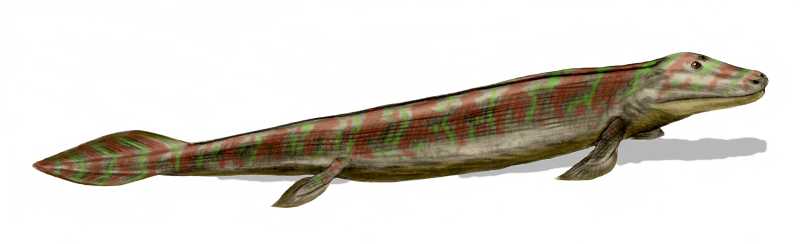 Over the last few years I have been learning about the theory of evolution, which reignited my passion for palaeontology. I knew that I wanted to study evolution in organisms I liked. My favourite transitions included fish to amphibians and dinosaurs to birds. I would have loved to study things like Tiktaalik or take a look at the famous Archaeopteryx specimens (I still would, but don't mind if it is not for academic reasons). My favourite though is the early evolution of mammals, possibly the most beautiful transition I can think of.
 So, I started my course wanting to study evolution and it was the vertebrates which really drew me in. I probably couldn't foresee any change to this even though I knew it would be a difficult area to break into. At one point I was asked by my tutor what my favourite invertebrate fossils were and I quickly answered "trilobites" without giving it much thought (the one on the right is Ctenopyge). I then started wondering if I would enjoy studying something other than vertebrates, with trilobites being the favourite of course. The answer seemed to be yes. I had gone from dinosaurs, to vertebrate evolution, to trilobites. Fortunately trilobites did evolve and are excellent for studying evolution (though all palaeontology is concerned with evolution anyway).
 Since then it has taken yet another twist. I have become fascinated with organisms which came before chordates arrived on the scene (at least from what we see in the fossils) and before even trilobites (though occasionally people think they have found proto-arthropods and compare them to the trilobites). Early metazoan evolution is what is currently fascinating meaning that I have started liking the enigmatic Ediacaran fossils along with the small shelly fossils (SSFs). I like the Cambrian explosion too, but it is what came before that which fascinates me. I remember the first time I saw the Ediacaran fauna and the SSFs; I thought the former were interesting to know about but boring to study and the latter looked rather dull.
I am at the end of the first year now, I have had all of my lectures until September. I wonder what else I will become fascinated with. There are aspects of palaeontology that I find dull, but I know that can change (I recently said gastropods were boring and taphonomy has never thrilled me). I've gone from dinosaurs to vertebrate evolution, to trilobites, to early metazoa, where next? I know I will always be drawn to evolution, for which I can study almost any group of organisms in the fossil record (invertebrates being the best). I've also been getting interested in the palaeoecology of the Zechstein sea, though that is likely just a personal thing on the side. Where next? We shall see....
I am at the end of the first year now, I have had all of my lectures until September. I wonder what else I will become fascinated with. There are aspects of palaeontology that I find dull, but I know that can change (I recently said gastropods were boring and taphonomy has never thrilled me). I've gone from dinosaurs to vertebrate evolution, to trilobites, to early metazoa, where next? I know I will always be drawn to evolution, for which I can study almost any group of organisms in the fossil record (invertebrates being the best). I've also been getting interested in the palaeoecology of the Zechstein sea, though that is likely just a personal thing on the side. Where next? We shall see....
Subscribe to:
Posts (Atom)
